


Does preaching make disciples?
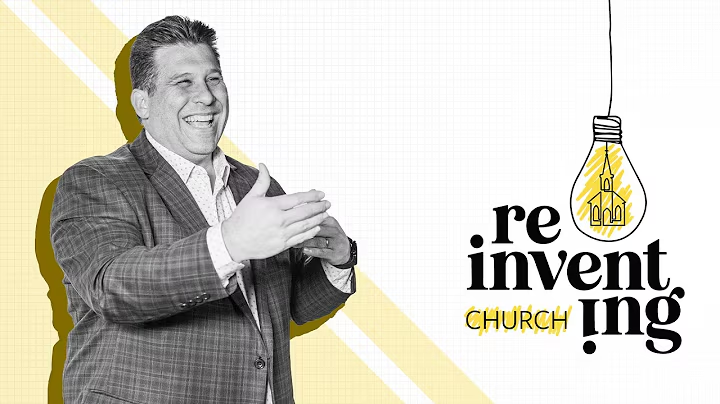
Season 4 of Reinventing Church opens with the practice most churches build their week around: the Sunday sermon. Derek Sanford traces preaching from Nehemiah’s wooden platform to the weekend experience of the modern church. Then Dave Rhodes of Clarity House joins Derek and Danielle Hartland to talk about sermons that build skills people use on Monday. The short version: Scripture makes preaching central. It never makes it sufficient.
What is Season 4 about?
Past seasons named what’s broken in the attractional church model. Season 4 goes looking for evidence that the alternative already exists. Our conviction is simple: the church has gotten good at passing on information and much less good at building competency.
Every other week, Dave Rhodes or Shane Stacey of Clarity House joins us to rethink one core church practice. In between, you’ll hear from everyday influencers, ordinary people who have figured out how to bring their faith into their workplace, their neighborhood, a nonprofit, or the group they meet with every week.
What does the Bible say about preaching?
A lot. Creation begins with God speaking (Psalm 33:6). John the Baptist arrives preaching (Matthew 3:1). Jesus launches his ministry by preaching (Matthew 4:17). The church is born from a sermon (Acts 2). Preaching sits at every hinge of the story.
Nehemiah 8 shows the pattern underneath it. Ezra reads from a wooden platform for about six hours. The Levites move through the crowd “giving the sense, so that the people understood.” And the sermon doesn’t end there. The people go build booths and keep the feast (chapter 8), confess together (chapter 9), and sign a written covenant (chapter 10). Preaching, processing, practice and commitment.
Every powerful sermon in Scripture sits inside a web: a household, a table, an apprenticeship, a covenant. Somewhere along the way, we kept the sermon and lost the web.
How did the sermon become the whole discipleship plan?
- The early church: Justin Martyr (around AD 155) says the presider “exhorts to the imitation of these good things.” Imitation was the goal. New believers also walked through up to three years of instruction before baptism.
- The medieval church: preaching went quiet for centuries until Dominic founded the Order of Preachers in 1216, and even then the preaching came packaged inside a rule of life.
- The Reformation: after visiting parishes in 1528, Luther found ordinary people who had “no knowledge whatever of Christian doctrine.” He didn’t just preach harder. He wrote the Small Catechism for fathers to teach at the kitchen table.
- Revivalism: the purpose of the sermon shifted from formation to decision. George Whitefield preached to crowds Ben Franklin estimated at 30,000. Late in life, Whitefield is said to have admitted that John Wesley, who gathered converts into weekly classes, “acted wisely,” while his own people were “a rope of sand.”
- The modern church: radio, television, the weekend experience, multisite and streaming. Today you can hear more sermons in a month than a medieval Christian heard in a lifetime.
Every era that got this right hung the sermon inside a system. Every era that drifted asked the sermon to be the system.
What does a sermon that trains people look like?
- Teaching and training. Dave points to 1 Timothy 4, where Paul tells Timothy to devote himself to good teaching and to godly training. We’ve done the first well and mostly skipped the second.
- Say it, see it, try it, tie it. As a soccer coach, Dave built every practice the same way: explain the skill, show a high-quality demo, run a drill with real-time feedback, then tie it back to the game.
- Knowledge rich, wisdom poor. Jesus ends the Sermon on the Mount with two builders who both hear his words. Only one puts them into practice (Matthew 7:24-27). A hearing-only church builds knowledge. Wisdom takes practice.
- The two-minute pause. One pastor added two minutes of silence after every sermon. Everyone writes down one sentence: What is God saying to me? What am I going to do about it this week? It trains people to hear from God, not only to hear a talk.
- Bring people into the struggle. Preachers wrestle with a text all week and then present only the resolution. Letting people into the struggle teaches them how to read their own Bibles.
- Make room for dialogue. Dave learned from Dr. Robert Smith Jr. that in the Black church, preaching is a conversation. The congregation talks back, and the Holy Spirit often shows up in the give and take.
Your one-week experiment
After the next sermon you hear, take two minutes before you leave your seat or start the car. Write one sentence for each question: What is God saying to me? What am I going to do about it this week? Put the second sentence somewhere you’ll see it on Wednesday.
If you preach, build those two minutes into this Sunday’s service, right after the message.
Frequently asked questions
Is preaching enough to make disciples?
Scripture treats preaching as central, but every example of powerful preaching in the Bible sits inside a larger web of practice, relationship and accountability. Preaching can begin discipleship. It can’t finish it alone.
What’s the difference between teaching and training in the church?
Teaching explains what to do. Training shows how, gives people a safe place to try it, and gives feedback while they do. Paul told Timothy to give himself to both (1 Timothy 4).
How can a church make its sermons more practical?
Start small. Add a two-minute pause after the sermon for people to write what God is saying and what they’ll do about it. Then build environments beyond Sunday where people can practice what they heard.
About Dave Rhodes
Dave is the Co-Founder of Clarity House and the Strategic Director for the Grace Family of Churches headquartered in Atlanta, GA. He has consulted with hundreds of local church leaders in creating disciple-making cultures for 20+ years and guided hundreds of followers of Jesus to know and name their special calling from God. Dave co-founded Life Younique and The Future Church Co. He was the U.S. Team Leader for 3DM and Lead Strategist at Wayfarer Ministries. He has worked as a collaborative partner with Leadership Network, 100 Movements, 10,000 Fathers, PLI, and Exponential. He has also written several books including Redefining Normal: An Open Invitation for Ordinary People Wanting to Become Extraordinary Disciples. Dave and his wife, Kim, have three children: Emma, Izzie, and Frankie.
Links & resources
- Clarity House: clarityhouse.us
- Get The Ordinary Altar, Derek’s weekly email
- Watch on YouTube
- Related: Ep 32, From TEACHING to TRAINING with Mark Canada
- Related: Ep 40, Mic Drop Moments (“Do I have a life worth imitating?”)
Did you like this episode? Tell us by leaving a rating or review! 🌟🌟🌟🌟🌟 If you did, you won’t want to miss what’s next (so subscribe now!). And help a friend by sharing this with them. Thank you! 🙏 Follow Derek on X, Instagram, or Facebook to join the conversation.